

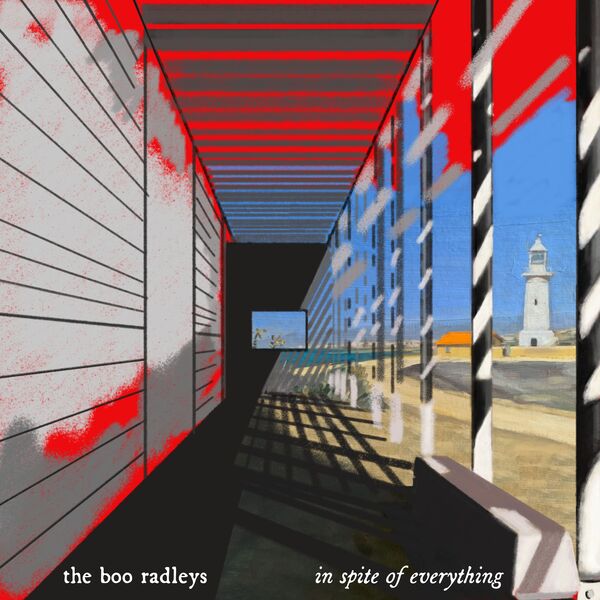
Why is there such a huge difference in sound between The Boo Radleys’ albums, from Giant Steps released in 1993 to In Spite Of Everything released in 2026? It almost feels like it’s not even the same band anymore?
The difference between Giant Steps (1993) and In Spite Of Everything (2026) is indeed very striking, to the point where it can feel like two completely different bands. This evolution can be explained by several deep factors related to time, lineup changes, and the broader musical context.
First of all, there are more than thirty years separating the two albums. Back in 1993, the members of The Boo Radleys were young and in a phase of artistic exploration. Giant Steps is a rich, sprawling, and experimental album, blending shoegaze, dream pop, indie rock, and psychedelic influences. It reflects a period where the band was pushing boundaries, with dense and sometimes deliberately chaotic production, in the spirit of bands like My Bloody Valentine or certain eras of The Beatles.
In contrast, In Spite Of Everything comes from a much more settled and mature approach. The sound is cleaner, more refined, with a focus on songwriting and emotion rather than sonic experimentation. This shift is natural. Over time, artists change, their influences evolve, and their creative process often becomes more thoughtful and controlled.
The band’s lineup also plays a major role. The Boo Radleys split in the late 1990s and reformed much later. Today, the project largely revolves around Martin Carr, the band’s main songwriter. This more centralized creative process leads to a clearer artistic direction, but also something less collective and less unpredictable than in the 1990s.
It’s also important to consider how music production has evolved. In the 90s, recordings were often more organic and experimental, with plenty of room for imperfection and happy accidents. Today, digital tools allow for a much more precise and controlled production style, which inevitably affects the final sound.
Finally, the musical landscape itself has changed dramatically. In 1993, the band was part of a vibrant and exploratory scene, where shoegaze and British indie were breaking new ground. By 2026, the music world is far more fragmented and defined, and artists tend to operate in more introspective or specialized spaces.
In short, that sense of disconnection is real. The Boo Radleys of 2026 are not quite the same as they were in 1993. However, this is less a complete change of identity and more a gradual transformation. The band has simply evolved over time, moving from a wild, experimental energy to a more mature and reflective form of expression.
The 2026 album In Spite Of Everything is generally seen as a solid but measured return, one that tends to divide listeners depending on their expectations. It is not a groundbreaking record, but rather a coherent, sincere, and thoughtful one, showing a band that has grown with time.
Musically, the album offers a mix of indie pop, lighter touches of shoegaze, and some contemporary influences. You can still hear elements that define the band, especially their sense of melody and well-crafted vocal harmonies. The record avoids monotony, moving between brighter moments, more atmospheric passages, and introspective sections. There is also a strong emotional dimension, shaped in part by personal events that have affected the band, giving some songs added depth.
However, several factors explain why the album is not universally praised. One of the most frequently mentioned points is the absence of Martin Carr, the band’s key historical songwriter, which has a significant impact on the artistic direction. The sound is now cleaner and more accessible, but also less daring and less experimental than albums like Giant Steps. Where that earlier record stood out for its overflowing creativity and unpredictability, In Spite Of Everything takes a more restrained and controlled approach.
Ultimately, the album can be seen as a work of maturity. It does not try to recreate the past, but instead offers a present-day version of the band, in line with their evolution. Those hoping to rediscover the intensity and creative explosion of the 90s may feel disappointed, while listeners who embrace this transformation will find an honest, moving, and enjoyable record.
© Thusblog