
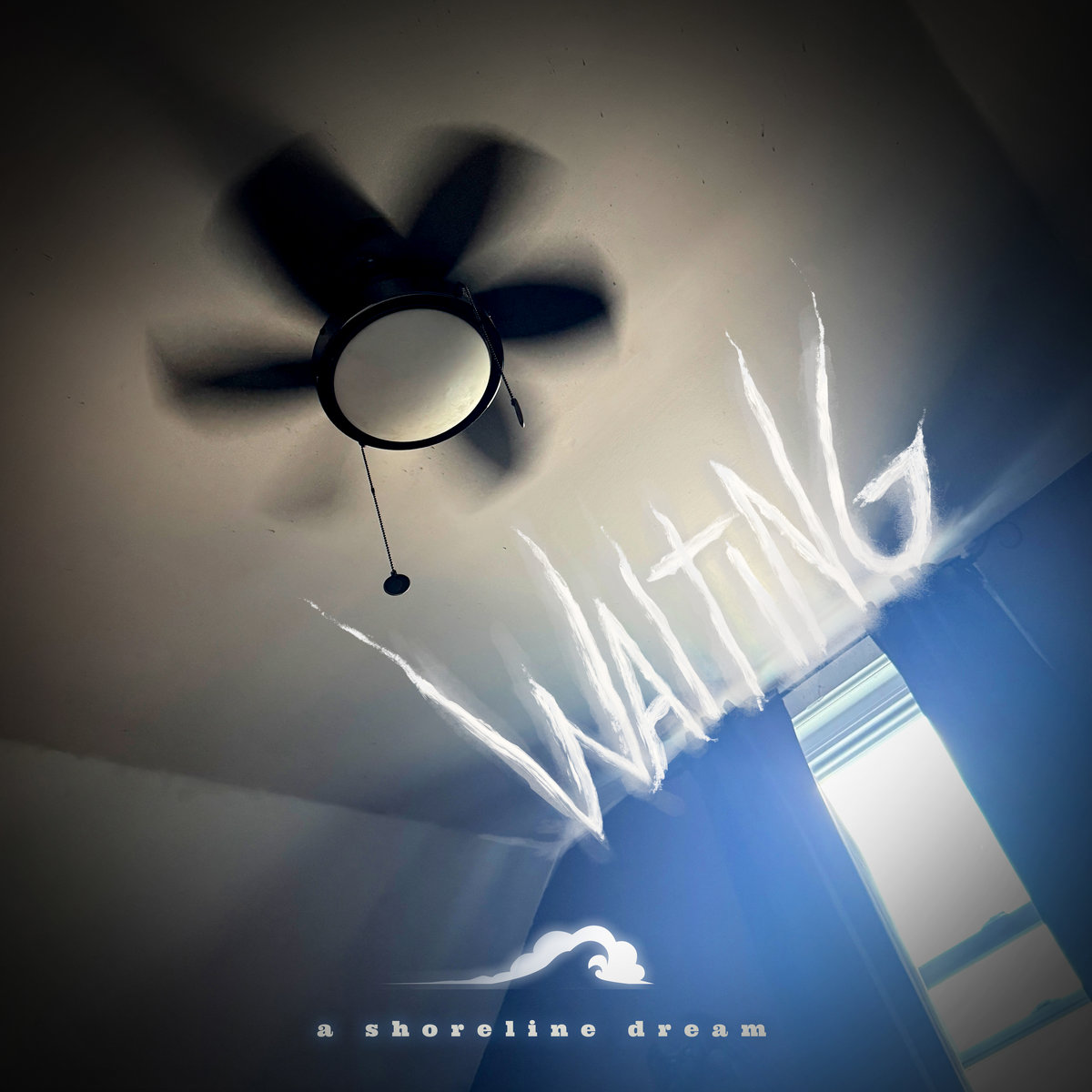
A Shoreline Dream - Waiting
Twenty years can change almost everything about a musician's life, from the people they work with to the reasons they continue making music. Yet certain creative instincts remain remarkably persistent. For A Shoreline Dream, the Denver-based project led by Ryan Policky, those instincts have always involved the exploration of sound, memory and the emotional possibilities of heavily processed guitars. On their latest album, Waiting, that fascination becomes the foundation for a more personal reflection on time, artistic commitment and the uncertainty of what lies ahead.
Released on October 16, 2026 through Latenight Weeknight Records, the nine-track album marks the twentieth anniversary of the group's debut, Avoiding the Consequences. It is also their second full-length release of 2026, following To Where They Have Gone in February, highlighting a particularly productive period in Policky's career.
Rather than approaching the anniversary through straightforward nostalgia, Waiting considers what it means to devote two decades to music while continuing to question the value of achievement, the consequences of personal decisions and the tendency to search for something that always seems to remain just beyond reach.
A Shoreline Dream emerged in 2005 in Denver, Colorado, with its roots in the city's Barnum neighbourhood. Originally established by Ryan Policky and Gabriel Ratliff, both previously involved with Pure Drama and Drop the Fear, the project developed from a shared interest in atmospheric alternative rock and experimental recording.
From the beginning, independence played an important role in its identity. Policky established Latenight Weeknight Records to release the band's music, allowing him to maintain control over the creative process at a time when the independent recording landscape was undergoing considerable change.
Their debut album, Avoiding the Consequences, arrived in 2006, introducing a sound that combined shoegaze guitars with psychedelic textures, subdued vocals and arrangements that frequently moved beyond conventional indie-rock structures.
Subsequent releases, including Recollections of Memory (2009), Losing Them All to This Time (2011), The Silent Sunrise (2014), Loveblind (2022) and Whitelined (2024), documented the gradual evolution of a project increasingly comfortable moving between dream pop, post-rock, progressive rock and darker electronic influences.
Along the way, A Shoreline Dream collaborated with several musicians associated with the development of atmospheric alternative music. Among the most notable were Ulrich Schnauss, whose electronic compositions helped establish a distinctive relationship between ambient music and shoegaze, and Mark Gardener of Ride, one of the defining groups of the original British shoegaze movement.
These connections provide useful context for A Shoreline Dream's musical direction, although the project has never been entirely dependent upon the conventions of a particular genre.
Today, its creative identity revolves around Policky and guitarist Erik Jeffries, with the recording process remaining largely under Policky's direction.
The title Waiting introduces the central concern of the new album. There is a familiar human tendency to postpone satisfaction, imagining that fulfilment will arrive with the next achievement, the next opportunity or some future moment when everything finally makes sense.
For a musician looking back upon twenty years of work, that idea acquires particular significance.
An artistic career is often measured through visible milestones, but those achievements reveal relatively little about the sacrifices, uncertainty and persistence required to reach them. Waiting examines that less visible experience, considering not only the passage of time but also the emotional cost of continually looking towards what might happen next.
The album's musical character reflects this introspective perspective.
Although A Shoreline Dream retain the expansive guitar textures that have defined their earlier recordings, the new material moves further into the darker territory of gothgaze, post-punk and darkwave. The melodies remain present, but they frequently emerge from arrangements characterised by shadowy atmospheres, deep reverberation and a pronounced sense of emotional distance.
There are echoes of Cocteau Twins in the treatment of the vocals, which often function as part of the overall instrumental texture rather than occupying a conventional position at the front of the mix. Elsewhere, the scale and gradual development of the arrangements suggest connections with the atmospheric ambitions of Sigur Rós and the more progressive aspects of Porcupine Tree.
These comparisons are useful reference points, but Policky's approach is ultimately shaped by his particular understanding of the recording studio as a creative instrument.
The opening track, “20,” provides the clearest expression of the album's anniversary theme.
Released ahead of the album, the song reflects upon the project's two decades of existence while bringing together several of the sounds that have remained important to Policky throughout his career. Heavy guitars, psychedelic details and a pronounced gothic atmosphere establish a musical landscape that feels connected to the band's past without simply reproducing it.
Policky has described the composition as an opportunity to combine some of his favourite musical elements, particularly his affection for darkwave, gothic rock and the immense guitar textures associated with shoegaze.
As an opening statement, 20 therefore serves two purposes. It acknowledges the history behind A Shoreline Dream while demonstrating that the project's creative interests remain firmly directed towards further exploration.
“Legacy” develops the album's reflective character from another perspective.
Where 20 considers the duration of an artistic journey, Legacy raises questions about what remains after years of creative activity. The song's title suggests the complicated relationship between personal ambition, the decisions made along the way and the lasting significance of work that may have required considerable sacrifice.
Together, these two tracks establish the conceptual foundation of Waiting. Their subjects are closely related, but they approach the passage of time from different directions: one looking back upon what has been accomplished, the other considering what that experience might ultimately mean.
The recording process provides another insight into the album's identity.
Ryan Policky performs almost all of the instrumental and vocal parts, while also taking responsibility for production, mixing and mastering. This unusually concentrated approach gives him considerable freedom to develop arrangements through successive layers of guitars, electronic treatments and carefully constructed effects.
Erik Jeffries contributes guitar to “Legacy,” “Dwell on Dwell on” and “Open My...”, with the latter also standing as the album's only composition officially credited to both musicians.
Although A Shoreline Dream is presented as a collaborative project, Waiting is therefore largely the product of Policky's individual studio work, shaped by a recording philosophy that has developed over two decades.
This independence is especially important to the way the music is constructed.
For Policky, effects processing is not merely a method of making guitars sound larger or more atmospheric. Reverb, distortion and electronic manipulation become integral parts of the compositions, influencing how melodies develop and how individual instruments interact.
A guitar line may begin as a relatively simple musical idea before being transformed into something more expansive through layers of processing. Similarly, the vocals can become deliberately blurred, creating a sense of emotional distance that complements the themes explored in the lyrics.
The result is music in which the distinction between instrumental performance and production becomes increasingly difficult to separate.
That approach also explains why A Shoreline Dream's work frequently extends beyond the conventional boundaries of shoegaze. Their songs are concerned as much with the creation of environments and shifting emotional spaces as with familiar verse-and-chorus structures.
On Waiting, the darker elements of that aesthetic appear particularly appropriate.
The influence of post-punk introduces a more pronounced sense of tension, while the gothic textures give the arrangements an introspective quality that supports the album's reflections on memory and uncertainty. Dream pop contributes a softer melodic dimension, preventing the music from becoming entirely consumed by its more imposing instrumental passages.
These different elements coexist without requiring the group to commit to one particular stylistic direction.
There is also an interesting relationship between the album's subject matter and its place within A Shoreline Dream's discography.
Reaching a twentieth anniversary could easily encourage an artist to revisit familiar sounds or construct a record primarily concerned with celebrating past achievements. Policky instead uses the occasion to question the meaning of those achievements and the expectations that continue to accompany creative work.
The fact that Waiting follows another album released only eight months earlier reinforces that perspective. Far from suggesting that A Shoreline Dream have reached a point of comfortable retrospection, the new record arrives during a period of sustained activity and experimentation.
It is an anniversary marked by continued creation rather than a simple review of what has already happened.
For listeners familiar with the project's earlier releases, Waiting offers a recognisable continuation of its atmospheric identity while placing greater emphasis on the darker qualities that have gradually become part of its musical vocabulary.
For newcomers, it provides an introduction to an artist whose relationship with shoegaze has always been broader than an affection for distorted guitars and distant vocals.
Waiting is ultimately an album about the complicated experience of moving forward while remaining conscious of everything that has already passed. Its reflections on persistence, sacrifice and artistic identity are closely connected to the circumstances of its creation, giving the music a personal significance that extends beyond the anniversary itself.
Twenty years after Avoiding the Consequences, A Shoreline Dream continue to develop their own interpretation of atmospheric alternative rock, drawing upon shoegaze, gothgaze, post-punk and experimental production without allowing those categories to determine the limits of their work.
The most interesting aspect of Waiting is that it does not treat twenty years of music as a destination. Instead, Ryan Policky considers the uncertainty that remains even after so much time has passed, and the creative impulse that continues to push him towards whatever comes next.
Perhaps the album's central question is not simply what we are waiting for, but whether the search itself has become the reason we continue.
© Thusblog